
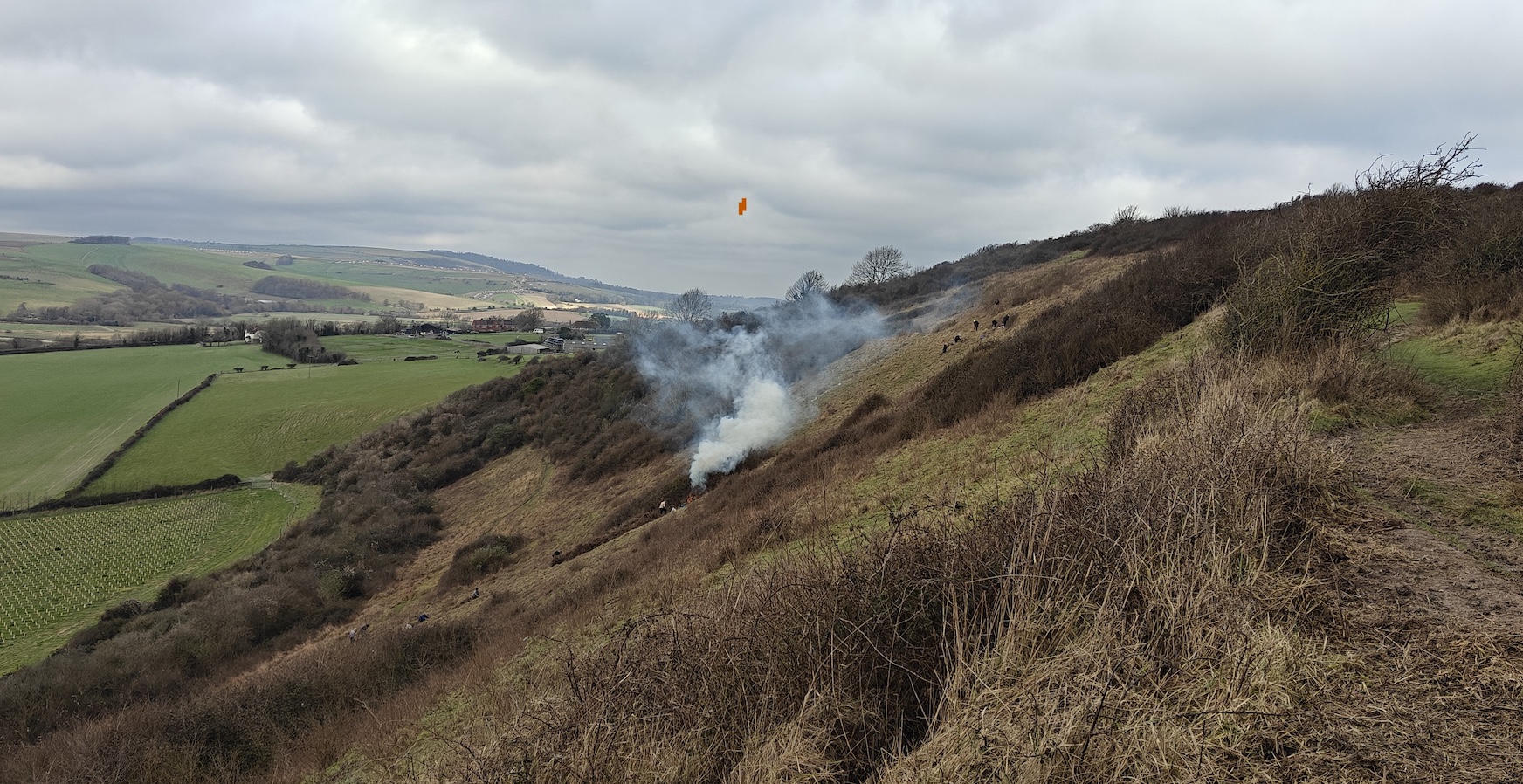
Last September we reported a new nature recovery project by local conservation volunteers to reverse a dramatic decline in butterfly populations on Mill Hill local nature reserve.
Mill Hill: grassland restoration is gathering pace
Four months ago, the central slope was largely carpeted with invading scrub. Since then, the change has been striking.
A series of volunteer workdays have cleared the heart of the slope top to bottom. Work continues steadily north and south, reopening chalk grassland that was being overwhelmed. What was once a tangle is becoming, again, open downland. The results are visible from afar – even from the bypass – and in time will show up clearly in satellite imagery: a small but definite mark of local action on the landscape.
This first phase, however, is entering its final weeks. There are only a handful of volunteer sessions left before work must pause for the nesting season.
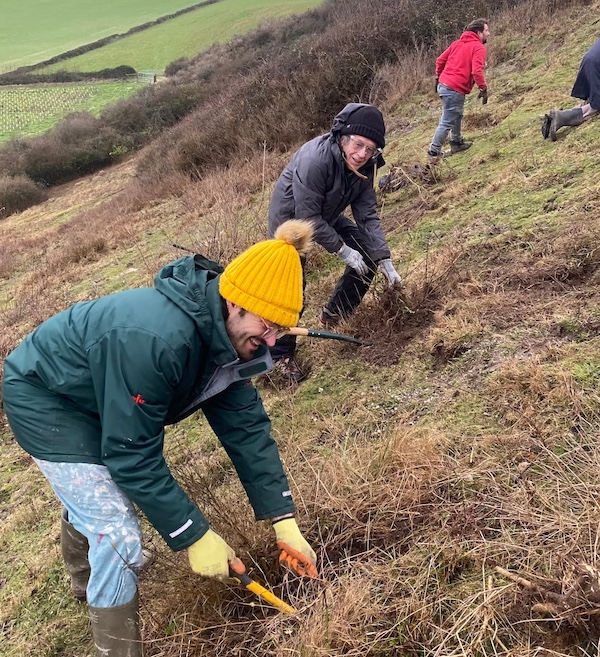
As spring advances, tools will be set aside and wildlife allowed to recolonise newly opened habitat. The window is narrowing. If you have been meaning to join in the opportunity is still there — but not for long.
Slow work, big impact
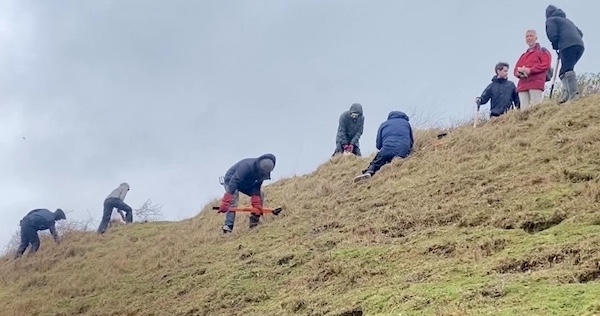
The work has been slow and deliberate. This is not clearance for its own sake, but ecological restoration. And it is hard work wielding heavy tools on steep slopes in all weathers on an exposed hillside. Yet the volunteers – spanning seven decades from youngest to oldest – have turned out throughout the winter, enjoying fresh air, good company and a real sense of achievement…
Space for wildlife
Not all of the scrub is being removed. Some substantial blocks remain untouched, providing refuge for nesting birds and for Mill Hill’s important adder population. These areas are being considered carefully within an evolving management plan, and some may remain until the work resumes next winter. Restoration, here, is about balance.
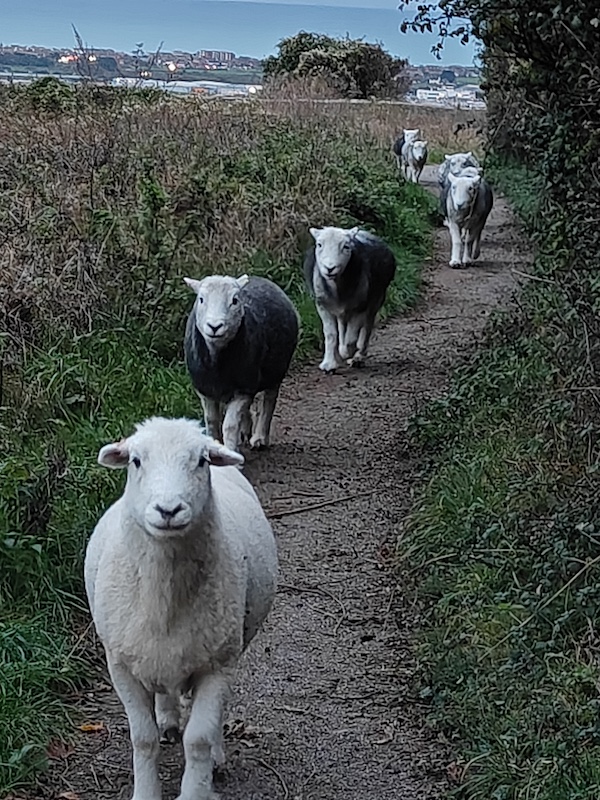
Earlier in the season, a team of four-legged conservation professionals – a small flock of Herdwick sheep – joined the effort. Their grazing played an important role in reducing regrowth and preparing the ground for longer-term management. They have now moved on to other sites, but plans are in place to welcome them back in the autumn.
A growing conservation alliance
One of the most encouraging developments has been the growing alliance behind the project. Regular volunteers from Friends of Old Shoreham, the Butterfly Conservation Group and SDOS – Shoreham’s ornithologists – have been working alongside Rangers from Adur District Council. the National Park and the County Council. More recently, members of Adur’s Green Party joined a session, and a corporate volunteering team from HSBC will join in March.
This widening circle of involvement matters. Landscape recovery is demanding work. It benefits from continuity, but it also thrives on moments of fresh momentum. More corporate and community groups interested in taking part will be warmly welcomed.
Beyond the main slope, other areas of the Hill are also seeing quiet improvement. In November, volunteers helped reopen paths that had almost vanished beneath encroaching scrub. Rangers have since followed through with powered tools, widening and standardising these routes so they are once again suitable for companionable walks. A return visit with hand tools will complete the detailed finishing work in places machinery cannot reach.
For the first few months volunteers were working with their own tools but in December the project team gained funding for conservation-grade tools and storage from Big Chalk. The equipment has started to arrive but the organisers are seeking new volunteers to transport the tools to site and keep them well-maintained.
Part of something larger
As a Big Chalk partner, the Mill Hill project sits within a far wider nature recovery network of 150 organisations, with a common vision of thriving chalk and limestone landscapes across southern England – linking local action to a broader ambition to restore and reconnect fragmented habitats.
For those who have taken part already, the visible change on the slope offers tangible feedback: effort has translated into landscape. For those who have been watching from a distance, the transformation is an invitation. And for new volunteers – individuals, families, or workplace teams – this is a rare chance to help shape the future character of a nationally important local hill.
Mill Hill’s grassland will not restore itself. But with steady hands, shared effort and careful planning, it is beginning to return.